
ATI TEAS Exam Prep 2026
Prepia IncEducation
4.737.00 Reviews
- Version
- 2.1.030
- Installs
- 10.00K
- Age Rating
- Everyone
Screenshots
Our Review of ATI TEAS Exam Prep 2026
 Analysis by Appyee
Preparing for a nursing entrance exam is rarely about finding one more pile of material. The harder task is choosing a study method you can actually follow when work, classes, family responsibilities, and test anxiety are competing for your attention. I spent time with ATI TEAS Exam Prep 2026 as an education app and came away with a fairly clear view of its role: it is most useful as a focused practice companion for people preparing for the ATI TEAS, especially those who need a large question bank and a convenient way to study in short sessions.
The app is developed by Prepia Inc and is free to install, with optional in-app purchases ranging from $7.99 to $99.99 per item. That distinction matters. You can begin without paying, but the most complete experience may require deciding whether an upgrade is worthwhile for your preparation plan. Its store summary centers on TEAS practice questions, tests, and study guides, so this is not a broad nursing school reference app or a general science-learning tool. It is aimed at one exam and should be judged by how well it supports deliberate TEAS preparation.
How I Would Decide Whether This App Fits My Study Plan
Before making this app part of my routine, I’d decide what job I need it to do: provide quick TEAS practice, help me find weak areas, or teach material I haven’t understood yet. That distinction matters because a question bank can keep revision moving, but it won’t automatically replace instruction or accountability. I’d use that decision to judge whether it deserves a regular place in my study plan.
Start with your weakest exam area, not the app’s biggest number
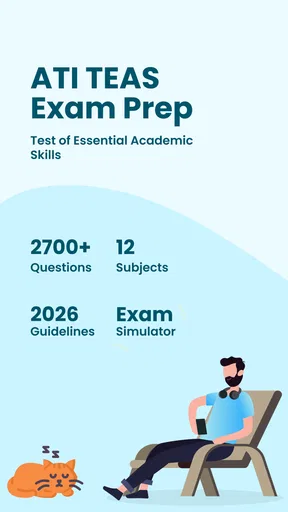
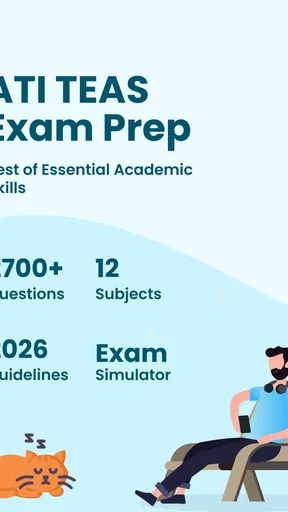
The headline attraction is a bank of around 1,900 practice questions. That sounds substantial, but quantity alone does not guarantee better preparation. I would first identify whether my main problem is reading, mathematics, science, or English and language usage. A large collection is valuable only when I use it to expose specific gaps rather than answer random questions until the activity feels familiar.
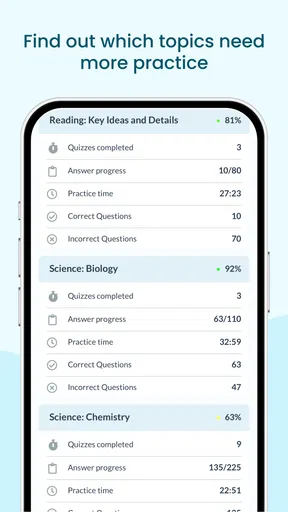
For example, someone who repeatedly loses points on ratios should use the app to isolate that kind of work, review the reasoning behind mistakes, and return to similar questions later. Someone who struggles with reading passages needs a different routine: timed interpretation, attention to what the question actually asks, and careful review of distractors. The useful decision is not simply “Does this app have enough questions?” but “Can I turn these questions into a feedback loop?”
I also consider how much structure I need. A student who already has class notes, a textbook, and a teacher may want a flexible question source. A student starting from scratch may need deeper explanations than a practice-centered app can provide. The app can support preparation, but I would not assume that answering questions alone replaces learning the underlying material.
Think about your available study time
This app makes the most sense for a fragmented schedule. If I have only a short break between shifts or a few quiet minutes before bed, opening a mobile practice tool is easier than setting up a full desk-based study session. Short bursts also make it less intimidating to begin, which is important when a large exam syllabus feels overwhelming.
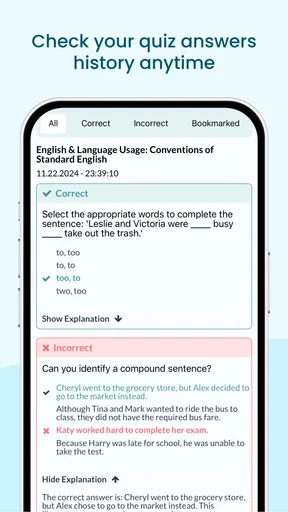
There is a trade-off, though. Mobile convenience can encourage shallow studying. I can tap through questions quickly and mistake activity for progress. To avoid that, I would keep a small error log outside the app. For every missed question, I would write the topic, the reason I chose the wrong answer, and the rule or concept I need to revisit. That simple habit turns the app from a quiz dispenser into a more useful diagnostic tool.
Check your device and purchase expectations before committing
ATI TEAS Exam Prep 2026 supports Android devices running version 7.0 or later, which covers a wide range of compatible phones and tablets. The age rating is Everyone, so the content is presented as suitable for a general audience. I would still check that my device has enough battery and storage for regular study, particularly if I plan to use it during commuting or away from a charger.
The free entry point is helpful for testing the experience before spending money. I would use that opportunity to assess three things: whether the question style feels relevant to my target exam, whether the explanations help me understand mistakes, and whether the available study material matches my level. Paying simply because the question count looks impressive would be a mistake. The right purchase is the one that removes a real limitation in my study routine.
What the app does particularly well
The strongest part of the experience is its narrow focus. Instead of mixing nursing school advice, clinical reference material, flashcards for unrelated subjects, and general academic content, it keeps attention on TEAS preparation. That focus reduces the temptation to wander into material that feels productive but does not address the exam I need to pass.
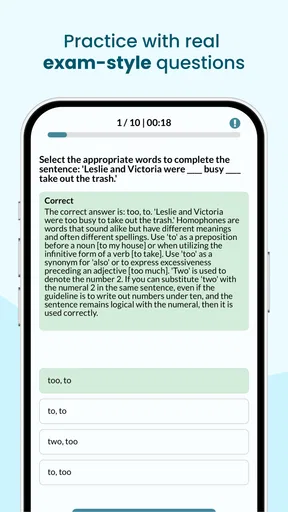
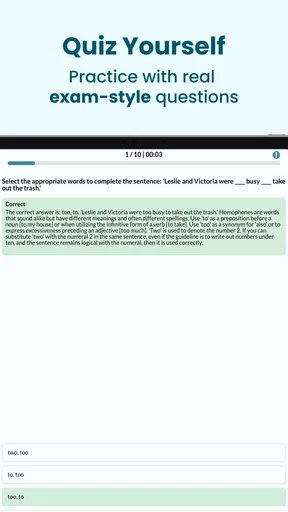
I also like the combination of questions, tests, and study guides. Each format serves a different purpose. Questions help me locate weak points. Tests help me practice switching between subjects and managing concentration. Study guides give me a way to refresh a concept before I attempt more questions. Used in that order, the app can support a sensible cycle: diagnose, review, practice, and reassess.
The rating is a 4.7 average from over 500 ratings, while the app has received dozens of written reviews. I treat that as encouraging rather than conclusive. Ratings suggest that many users find the app useful, but they cannot tell me whether it matches my learning style or whether the paid content is necessary for my particular goal. I would still test the free portion personally.
A practical weekly workflow
If I were preparing with this app, I would avoid trying to complete a huge number of questions in one sitting. On the first day, I would take a mixed practice session to see which areas create the most trouble. I would then divide the next several study sessions by topic, giving extra time to the weakest area instead of distributing time equally.
After each session, I would separate mistakes into three groups: knowledge gaps, careless reading, and timing problems. A knowledge gap calls for a study guide or another learning source. Careless reading calls for slowing down and marking key terms. Timing problems call for shorter timed sets and a deliberate pacing strategy. This classification is one of the most useful ways to get more from a question bank, because two wrong answers can require completely different corrections.
Near the end of the week, I would use a test-style session rather than another topic drill. The purpose would not be to chase a high result but to see whether the week’s review transfers to mixed conditions. If science questions improve while mathematics remains weak, the following week should not repeat the same schedule. I would adjust it based on evidence.
Where it has an advantage over ordinary alternatives
Compared with relying only on printed books, a dedicated app is easier to carry and easier to fit into spare moments. A book may offer more room for detailed annotation, but it can be inconvenient when I have only a phone available. The app’s focused format also makes it easier to move directly from a question to the next practice task.
Compared with searching the web for free questions, a dedicated TEAS tool should reduce the time spent deciding whether a random question is relevant. Online searching can produce useful material, but it can also lead to uneven difficulty, outdated framing, or a mixture of exam subjects without a clear plan. The value here is not merely having questions on a screen; it is having preparation organized around the ATI TEAS.
Compared with a live tutor or formal course, the app is more private and flexible, and it may be easier to use repeatedly without arranging a schedule. The downside is that it cannot observe my habits, notice confusion in real time, or explain a concept in a personalized conversation. If I keep missing the same type of problem after reviewing it, a teacher, tutor, or stronger textbook may be the better next step.
Important limitations before choosing it
The app’s exam focus is both its strength and its boundary. It is not the right choice if I am looking for broad nursing coursework, clinical skill instruction, medication references, or help with applications and interviews. Its usefulness depends on having the ATI TEAS as a concrete target.
I would also be cautious about treating practice performance as a prediction of my final result. Familiarity with an app’s question style can make later sessions feel easier without proving that I understand the topic deeply. To counter that effect, I would occasionally explain an answer in my own words before checking the solution and solve a similar problem without looking at the choices.
The purchase range deserves attention as well. Since individual in-app items can cost from $7.99 to $99.99, the free version should be used as a trial, not merely as a preview I rush through. Before buying, I would decide how many weeks I plan to study, which resources I already own, and whether the paid material fills a specific gap. Someone who already has a complete course may need only targeted practice, while someone without any other support may value the broader package more.
Who may prefer another preparation method
I would look elsewhere if I learn best through long explanations, worked examples, and instructor feedback. A textbook or course may be slower to use but better for building a foundation. I would also consider a tutor if I have repeatedly studied the same subject without improvement, particularly in mathematics or science where one misunderstood step can affect many later questions.
Students who need strict accountability may prefer scheduled classes or a study group. An app waits for me to open it; it does not create motivation on my behalf. That freedom is excellent for independent learners, but it can become a weakness for someone who postpones practice until the exam is close.
On the other hand, people who already understand most of the content and mainly need repetition, mixed practice, and test preparation may find a dedicated app more efficient than rereading an entire book. In that situation, the mobile format can keep preparation active instead of passive.
What switching resources really costs
Changing from one study system to another is not free, even when the new app itself is free to install. I lose time learning a new layout, rebuilding a schedule, and deciding which material to trust. That is why I would not abandon an effective book or course just because this app is convenient. I would add it where it solves a clear problem, such as a lack of portable practice.
The opposite switch can also be costly. If I use only an app and later discover that I need deeper instruction, I may have to revisit topics from the beginning. A better approach is to assign each resource a job. I might use a textbook for difficult concepts, the app for daily questions, and a full test session for pacing. This prevents the false choice between mobile practice and more traditional preparation.
I would also protect my review notes when changing tools. Keeping an error log outside the app means my learning does not disappear if I stop using one resource. The notes become a personal map of recurring weaknesses, and that is more valuable than any single streak of completed questions.
My recommendation for different kinds of students
For an independent student preparing for the ATI TEAS who wants a focused mobile question bank, I think this app is worth trying. The free installation lowers the risk, and the combination of practice questions, tests, and study guides gives it more range than a simple quiz-only tool. The developer, Prepia Inc, has kept the product centered on a specific exam rather than trying to make it a general nursing app.
For someone with limited daily time, I would recommend using it in short, intentional sessions and recording mistakes after each one. That is where the app is most likely to earn its place: not as a replacement for every resource, but as a convenient way to keep exam practice moving when a full study setup is unavailable.
For a student who needs teaching rather than testing, my recommendation is more cautious. Try the free material, but pair it with a dependable learning source. If explanations feel too brief for the topics you miss, do not keep purchasing more practice in the hope that repetition will solve a knowledge gap. More questions are useful only when they lead to better understanding.
The current version is 2.1.030, and the app was released on November 28, 2024. Those details place it among relatively recent options, but I would still judge it by the quality of my study sessions rather than by recency alone. A newer app is not automatically a better teacher; a focused app that helps me correct mistakes consistently is the more meaningful standard.
My final view is positive but practical. ATI TEAS Exam Prep 2026 is best used as a structured practice partner, not as the entire preparation strategy. I would install it, explore the free experience, identify whether its questions and guides fit my needs, and only then consider an in-app purchase. It is a strong match for portable, exam-specific practice and a weaker match for students who need personal instruction, extensive theory, or external accountability. Used with an error log and a second source for difficult concepts, it can turn scattered spare minutes into purposeful TEAS preparation.
Verdict
Strengths of ATI TEAS Exam Prep 2026
- Covers key TEAS subjects, including math, science, reading, and English.
- Practice questions help users become familiar with the exam format.
- Useful for reviewing concepts during short study sessions.
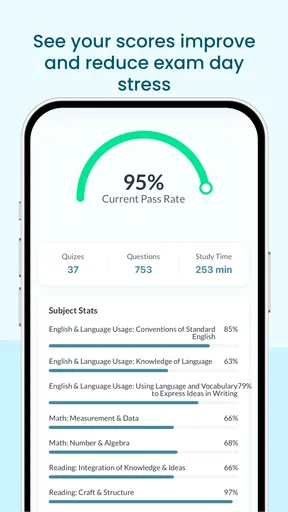
- Progress tracking makes it easier to monitor preparation over time.
- Can support self-paced study without needing a fixed classroom schedule.
Limitations of ATI TEAS Exam Prep 2026
- Some explanations may feel too brief for difficult science topics.
- The app cannot replace official ATI study materials or full-length practice exams.
- Question difficulty may not always match the real TEAS exam.
- Frequent practice can require a premium subscription or in-app purchases.
- Users still need a structured study plan to cover every exam objective.
Other Releases by Prepia Inc
View All
AMERICAN NURSE EXAM PREP 2026
Education4.8

Prepia PTCB PTCE Exam Prep
Education4.7

ASWB BSW LCSW MSW | Exam Prep
Education4.7

NREMT EMT EXAM PREP 2026
Education4.6
Similar Picks in This Category
View All
Duolingo: Language Lessons
Duolingo4.7

Google Classroom
Google LLC2.8

Unacademy: Learn & Crack Exams
Unacademy3.2

Bible App for Kids
Life.Church4.4

Cake - Learn English & Korean
Cake Corp.4.7

Brainly: AI Homework Helper
Brainly4.5
Frequently Asked Questions
What is ATI TEAS Exam Prep 2026?
ATI TEAS Exam Prep 2026 is a study app designed to help nursing and allied-health applicants prepare for the Test of Essential Academic Skills. It generally focuses on the exam’s main areas—Reading, Mathematics, Science, and English and Language Usage—through practice questions, explanations, review material, and progress-oriented study tools. It should be viewed as a preparation aid, not an official replacement for ATI’s current exam information or your school’s admission requirements.
Does ATI TEAS Exam Prep 2026 cover all sections of the TEAS exam?
The app is intended to support preparation across the principal TEAS subjects: Reading, Mathematics, Science, and English and Language Usage. Before relying on it as your only resource, check the current feature description and question categories because app content can change between updates. Exam versions, scoring expectations, time limits, and institutional requirements may also vary, so confirm the latest details directly with ATI and the nursing programs to which you plan to apply.
Is ATI TEAS Exam Prep 2026 suitable for beginners?
Yes, the app can be useful for beginners because practice questions and explanations allow students to identify weak areas before building a detailed study schedule. However, beginners should not simply memorize answers. The best results usually come from reviewing the underlying concepts, taking timed practice sessions, and keeping notes about recurring mistakes. Students who need extensive instruction in biology, grammar, reading skills, or mathematics may benefit from using a textbook, class, or tutor alongside the app.
Is ATI TEAS Exam Prep 2026 free to use?
Availability and pricing may depend on the platform, region, and the specific version offered in the app store. Some preparation apps provide free questions or basic tools while placing larger question banks, detailed explanations, analytics, or complete practice tests behind in-app purchases or a subscription. Review the listing carefully before downloading, including trial terms and renewal information. If payment is required, compare the included content with official ATI resources and other reputable preparation options.
Can I use this app as my only preparation resource for the TEAS?
Although ATI TEAS Exam Prep 2026 may be convenient for daily practice, using a single app as your entire study plan is not always advisable. Preparation quality depends on the accuracy and freshness of its material, while the official exam information remains the most reliable source for current policies and structure. Combine the app with a diagnostic test, a realistic study schedule, full-length timed practice, and targeted review of weak subjects. Always verify application deadlines and score requirements with each school.
